
Sustainable Transport Infrastructure Development Embracing a Circular Economy
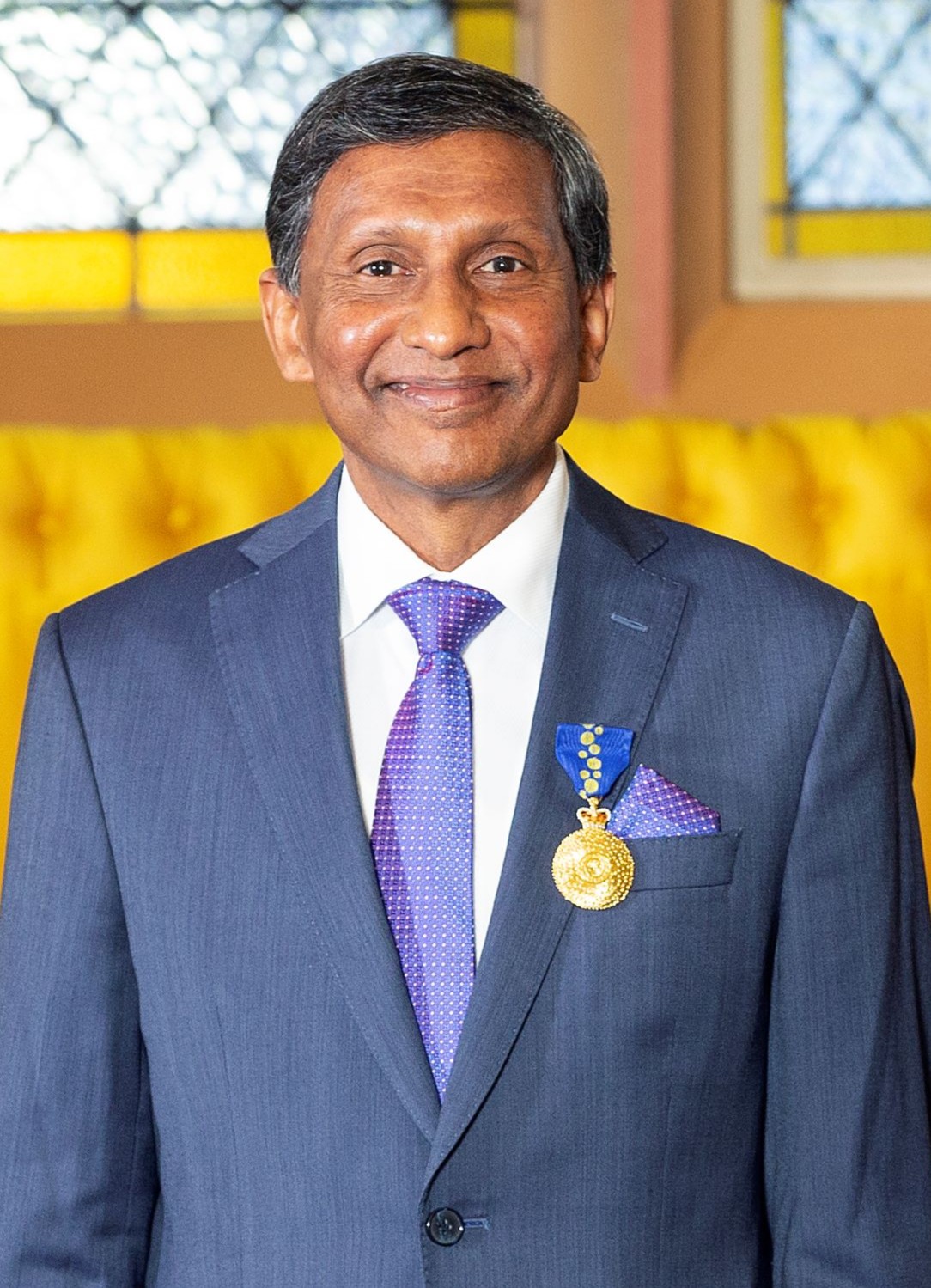
Distinguished Professor Buddhima Indraratna is a world leader in geotechnical & railway engineering. For his stellar contributions, he was inducted as Member of the Order of Australia, Fellow of the Royal Society of New South Wales, Fellow of the Australian Academy of Technological Sciences and Engineering, and a Life Member of the Australian Geomechanics Society. His notable accolades include Sir John Holland Civil Engineer of the Year in 2024 in Australia, and the esteem honour of being the 6th International Civil Engineer bestowed on him in Madrid, Spain in 2023. He has authored over 1000 publications, including 14 books and more than 500 journal papers, and has delivered 90+ keynote lectures worldwide. As the founding Director of the National Training Centre for Rail Infrastructure, he has led projects exceeding AUD 40 million in the past 2 decades. With an H-index approaching 100 and over 35,000 citations, Prof. Indraratna is one of the most highly cited civil engineers globally. To date, he has supervised over 90 PhD students and 40 postdoctoral fellows. He is a Chartered Engineer of Australia, UK and Sri Lanka, and a Fellow of the Institution of Engineers Australia (FIEAust), the American Society of Civil Engineers (FASCE), the Institute of Engineers Sri Lanka (FIESL), and the Geological Society of UK (FGS).
At ICGE – Colombo 2026, Professor Buddhima will present a keynote on the reuse of industrial waste materials—coal wash, steel slag, recycled rubber—in transport infrastructure. Drawing from field trials in Port Kembla and the Chullora Rail Precinct, his lecture will demonstrate how engineered recycled materials can outperform conventional aggregates, promoting sustainability and circular economy practices in infrastructure. This talk will highlight practical pathways for building resilient, eco-friendly, and technically sound transportation systems.
Role of Advanced Geotechnical Modelling in Solving Complex Problems
Professor Gopal Madabhushi is a renowned expert in soil dynamics and earthquake engineering at the University of Cambridge, where he leads the Geotechnical and Geo-Environmental Group and directs the Schofield Centre. With over 35 years of experience, his expertise spans dynamic centrifuge modelling, finite element analysis, soil liquefaction, and geotechnical resilience. He has also applied his research to biomechanics in hip surgeries. Prof. Madabhushi has developed key experimental tools like the SAM earthquake actuator, servo-hydraulic shakers, and dynamic PIV systems. He has led earthquake reconnaissance missions in Taiwan, India, and beyond, and chaired the Earthquake Engineering Field Investigation Team (EEFIT). He is a Fellow of the ICE (2022) and the Royal Academy of Engineering (2024), and has received multiple awards including the TK Hsieh Award and BGA Medal.
At ICGE – Colombo 2026, he will discuss how centrifuge modelling enhances our understanding of complex geotechnical problems such as offshore monopiles, tunnelling, pile-soil interaction, and climate impacts on infrastructure. His keynote will emphasise the importance of physical modelling in validating numerical simulations, offering critical insights for the reliable design of modern infrastructure systems.
Geotechnical Resilience: Engineering for Recovery, Adaptation, and Longevity
Professor Jayantha Kodikara is a leading geotechnical and pavement engineering researcher, serving as Director of the ARC SPARC Hub at Monash University and head of the Monash Pipeline Research Group. With over 500 publications and 50+ PhD completions, his work has advanced both fundamental and applied geotechnics. He is best known for developing the MPK Framework, which links traditional compaction curves with unsaturated soil modelling. His applied research on buried pipeline deterioration has transformed asset management practices globally. Prof. Kodikara is a Chartered Engineer, Fellow of Engineers Australia, and recipient of the B/HERT Award (2016), ARRB Impact Award (2019), and several innovation awards at Monash.
At ICGE – Colombo 2026, his keynote will explore how to build geotechnical infrastructure that is adaptable, recoverable, and long-lasting amidst climate extremes and resource constraints. Using examples from roads, pipelines, and foundations, he will demonstrate how tools like AI, digital twins, and satellite sensing can be integrated into resilient infrastructure design. His lecture will provide a vision for geotechnical engineering that balances innovation with long-term sustainability.
From Distress to Stability: Geotechnical Solutions for Infrastructure Projects in Complex Ground Conditions
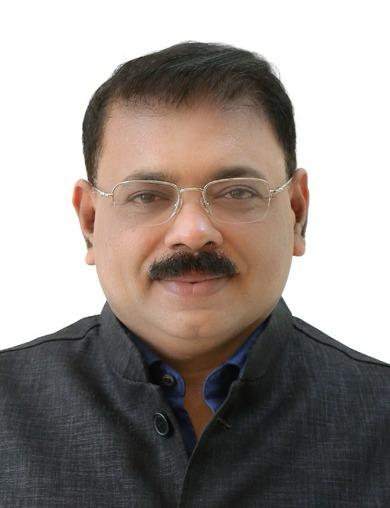
Dr. Anil Joseph, Managing Director of Geostructurals (P) Ltd., is a leading geotechnical and structural consultant with over 31 years of professional experience. He has provided foundation and structural consultancy for more than 3,500 high-rise structures and major infrastructure projects in India and abroad. He holds a Ph.D. from NIT Calicut on the pre-compression of soft marine clays and currently serves as Vice President of Asia ISSMGE and President of the Indian Geotechnical Society. He has also held several senior positions in leading professional engineering organizations in India.
At ICGE – Colombo 2026, Dr. Joseph will present a keynote titled “From Distress to Stability: Geotechnical Solutions for Infrastructure Projects in Complex Ground Conditions.” Drawing on challenging projects in India, he will present case studies on embankment failure in very soft ground and the protection of a buried gas pipeline during the demolition of the Supertech Twin Towers. The keynote will highlight how detailed site investigation, numerical modelling, ground improvement, field monitoring and innovative mitigation measures can provide practical solutions to complex geotechnical problems and contribute to safer and more resilient infrastructure.
On the Landslide Resilience under Climate Change
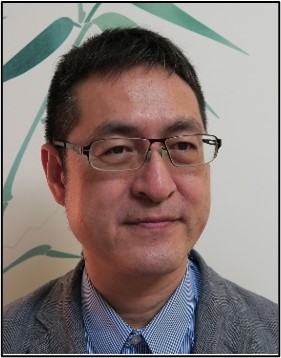
Professor Keh-Jian (Albert) Shou is Vice President for Asia of the International Society for Soil Mechanics and Geotechnical Engineering (2022–2026), Chairman of the International Society for Trenchless Technology (2022–2025), Honorary Chairman of the Chinese Taipei Society for Trenchless Technology, and a leading academic at the Department of Civil Engineering, National Chung-Hsing University, Taiwan. He is internationally recognised for his contributions to rock mechanics, engineering geology, and trenchless technology, with over 200 published papers. Prof. Shou serves as Editor of Tunnelling and Underground Space Technology and Associate Editor of ASCE’s Journal of Pipeline Systems Engineering and Practice. He earned his Ph.D. from the University of Minnesota (1993) and has held senior academic and industry roles across the U.S., Japan, Italy, and South Africa.
At ICGE – Colombo 2026, Prof. Shou will present on “Landslide Resilience under Climate Change.” Focusing on Taiwan’s mountain regions, where extreme rainfall events increasingly trigger landslides, he will demonstrate the use of machine learning—particularly logistic regression—to analyse and predict landslide susceptibility. By integrating rainfall prediction models with resilience frameworks, his lecture will address uncertainty in hazard forecasts and present practical strategies for managing and mitigating landslide risks under a changing climate.
State of Practice Lecture: Advances in Settlement Prediction for Soft Soils
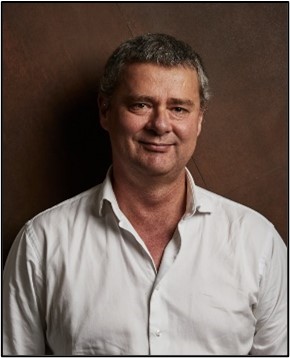
Dr. Richard Kelly is Chief Technical Principal at SMEC, with over 25 years of experience in geotechnical engineering, specializing in soft soils and ground improvement. He obtained his BE in Civil Engineering from the University of Sydney in 1993, before commencing his career with Golder Associates. He returned to the University of Sydney to complete his PhD in 2001 and subsequently worked as a postdoctoral researcher at the University of Oxford (2002–2004). Upon returning to Australia, he worked with Coffey from 2005 to 2014, during which he also undertook a sabbatical to establish a soft soil field testing research facility for the University of Newcastle (2012–2013). Since 2014, Dr. Kelly has been with SMEC, providing leadership in technical excellence and innovation. His recent contributions include the application of machine learning techniques for embankment settlement prediction.
At ICGE – Colombo 2026, Dr. Richard Kelly will deliver a State of Practice (SOP) lecture on “Settlement Prediction in Soft Soils.” His talk will explore the challenges of predicting settlement, such as sample disturbance, non-linear behaviour, and parameter uncertainty, and how these affect reliability in design. He will demonstrate how probabilistic methods—including Monte Carlo simulation and reliability analyses—can be applied to better capture variability and improve confidence in predictions. Building on this, Dr. Kelly will emphasise the importance of the observational method and back-analysis, showing how their Bayesian parallels support early decision-making and effective risk management. The SOP presentation will conclude with applications of reliability analysis to selected real-life case studies from Australia.